An Eye for Infection
Interactive Inspection Game
Overview
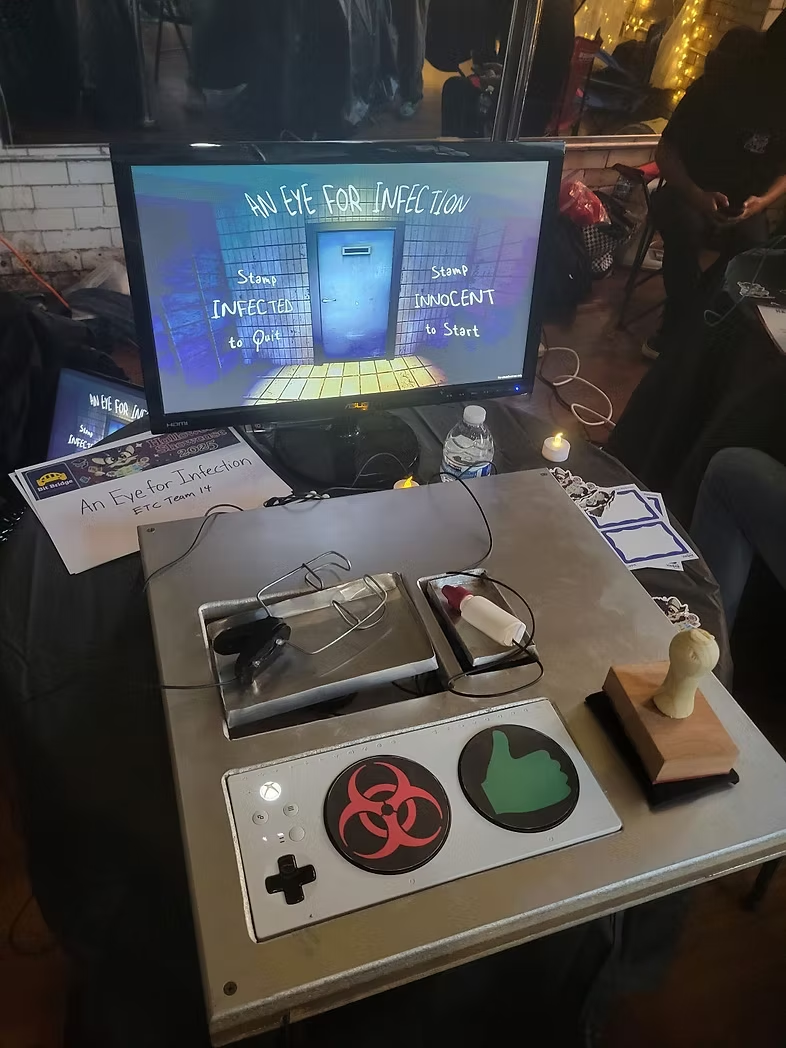
Eye for Infection is a psychological inspection game where the player takes the role of a border agent tasked with identifying infected individuals. Patients are examined through invasive eye inspections to detect anomalies that reveal infection.
The player must decide whether a patient is healthy or infected based on subtle visual cues and behavioral signals. The experience focuses on tension, observation, and moral pressure as the player becomes the final authority responsible for preventing the infected from entering society.
Role: Technical Artist / Game Artist
My work focused on building visual systems, interactive assets, and player feedback that support the inspection gameplay loop.
Key Contributions
Diegetic UI
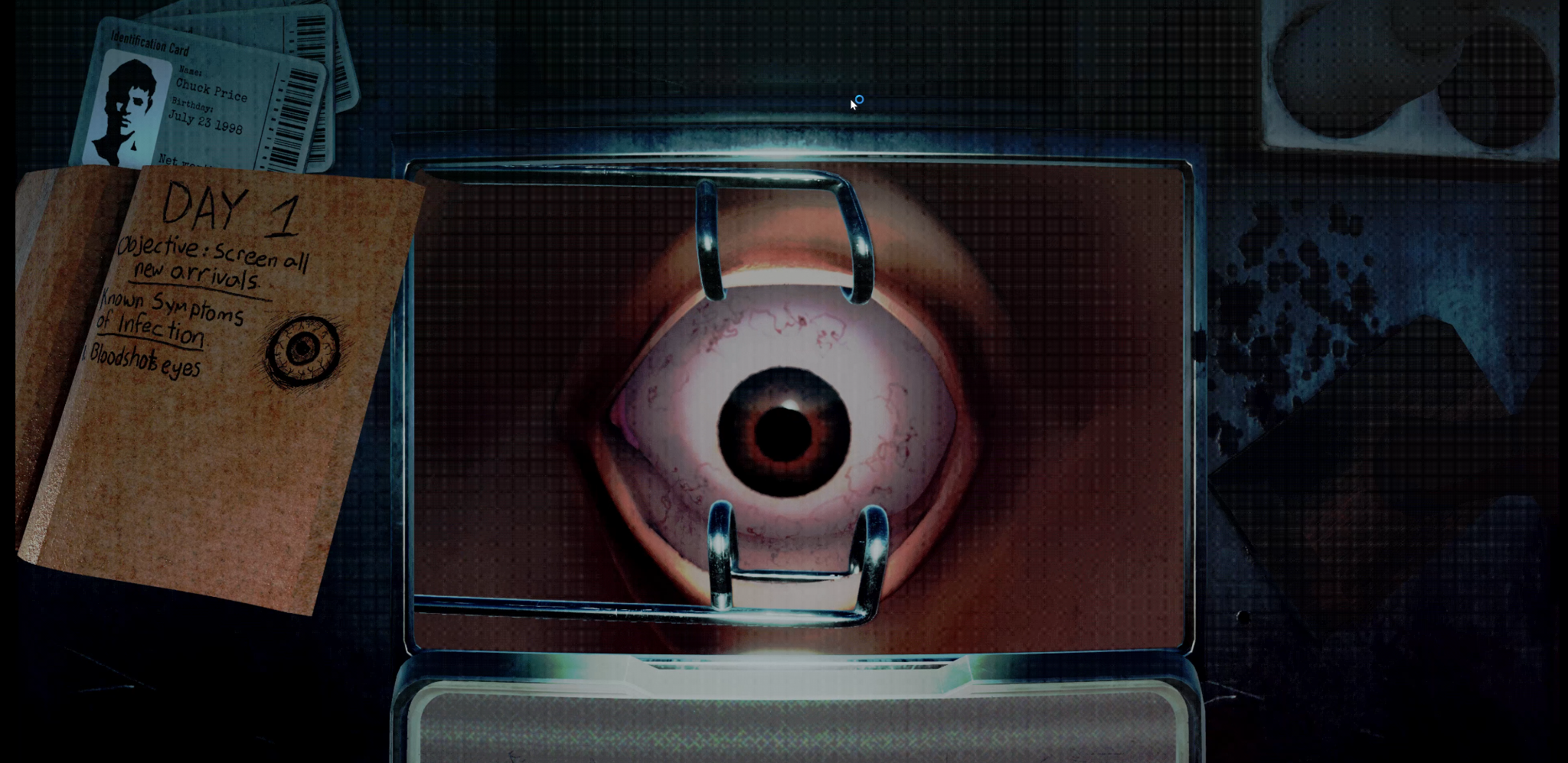
The game relies heavily on diegetic interfaces, where information is presented as objects inside the world rather than traditional HUD elements. One example is the symptom reference book, which the player can consult to identify infection indicators.
- Modeled the book asset
- Created the UI layout inside the book
- Integrated the interaction system in-engine
Asset Creation
Created several in-game assets using a standard real-time art pipeline. Assets were built to support the close-up inspection gameplay, meaning they needed to hold up under very close camera views.
Workflow
- Modeling: Blender
- Texturing: Substance Painter
Assets
- Inspection tools
- Environment props
- Interface objects
Character Eye System
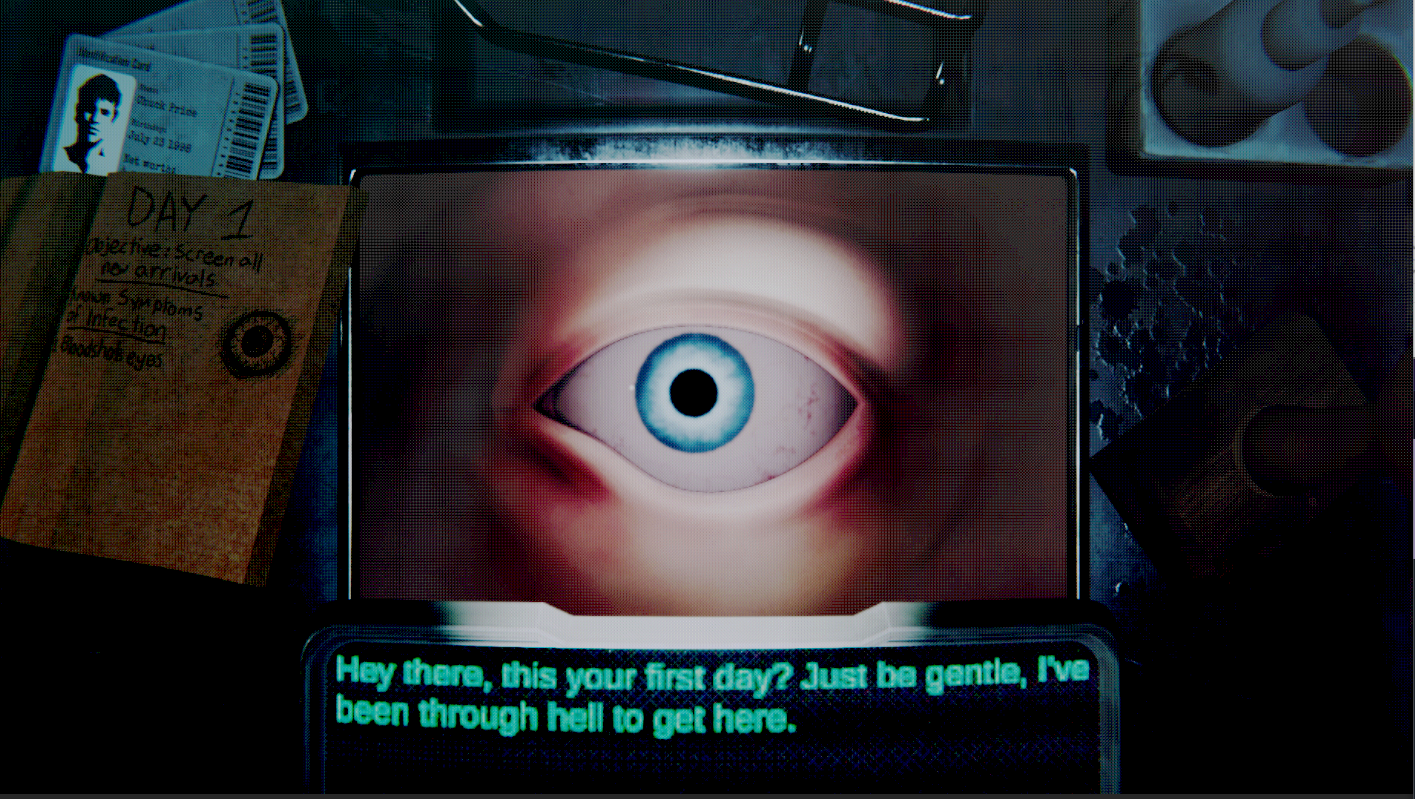
A key gameplay element involves observing patients' eyes for signs of infection. The system is driven by a simple behavioral state machine controlling eye responses.
I reproduced the eye behavior system independently to better understand and modify it.
- Blend shape-based eye deformation
- Rigging and skinning setup
- Parameter-driven animation via Unity Slerp interpolation
- Smooth transitions between behavioral states
Visual Feedback Systems
Player feedback was an important design challenge. I participated in designing how the game communicates the result of player actions through visual and environmental signals.
Text VFX
Scripted shaking effect applied to UI text to create tension and urgency
Lighting Effects
Pseudo-random light flickering system to reinforce atmosphere
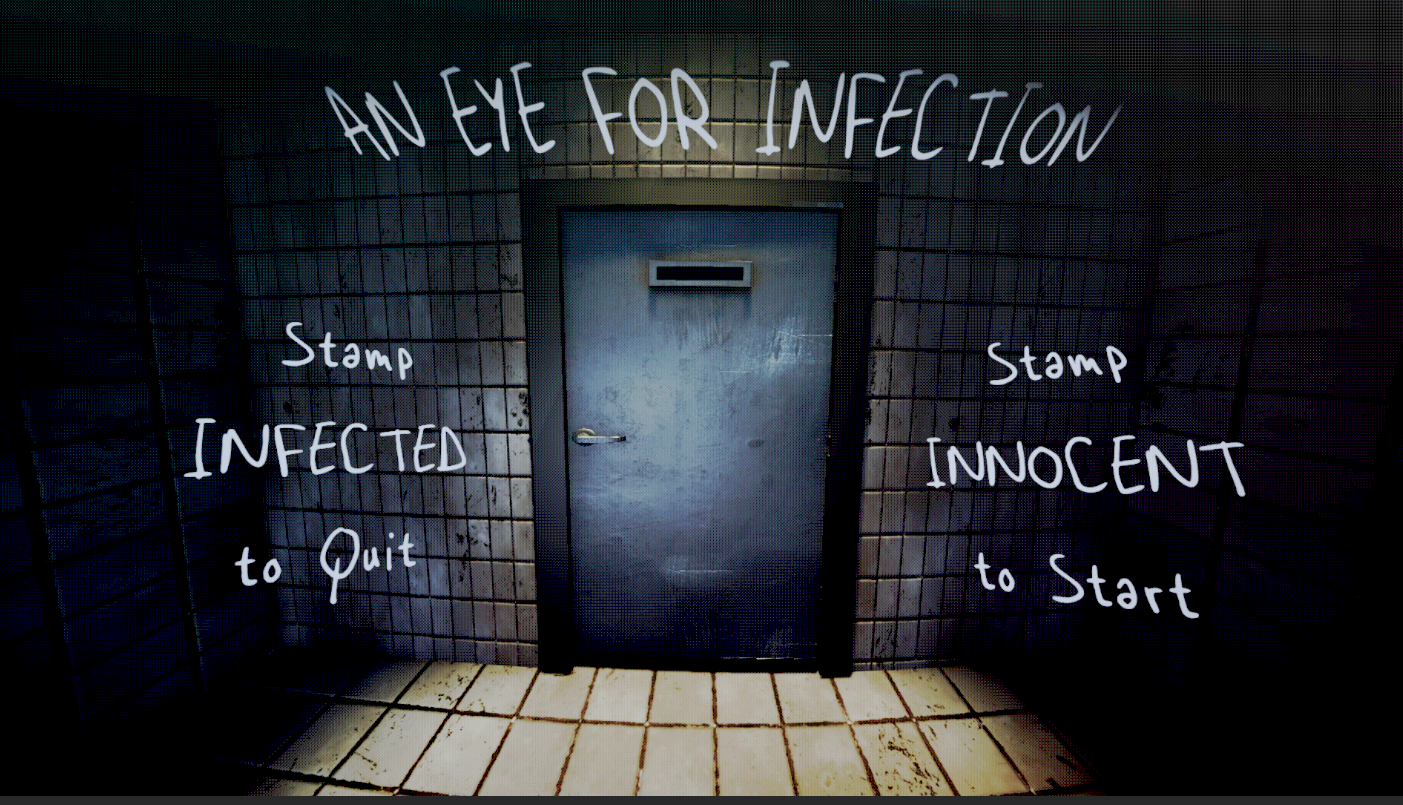
Post-Processing & Main Menu
Implemented several visual post-processing effects to support the game's aesthetic, including dithering and atmospheric lighting adjustments. These effects contribute to the unsettling visual tone and help unify the overall visual style.
Also implemented simple visual effects on the game menu UI to enhance immersion and establish the mood immediately upon entering the game.